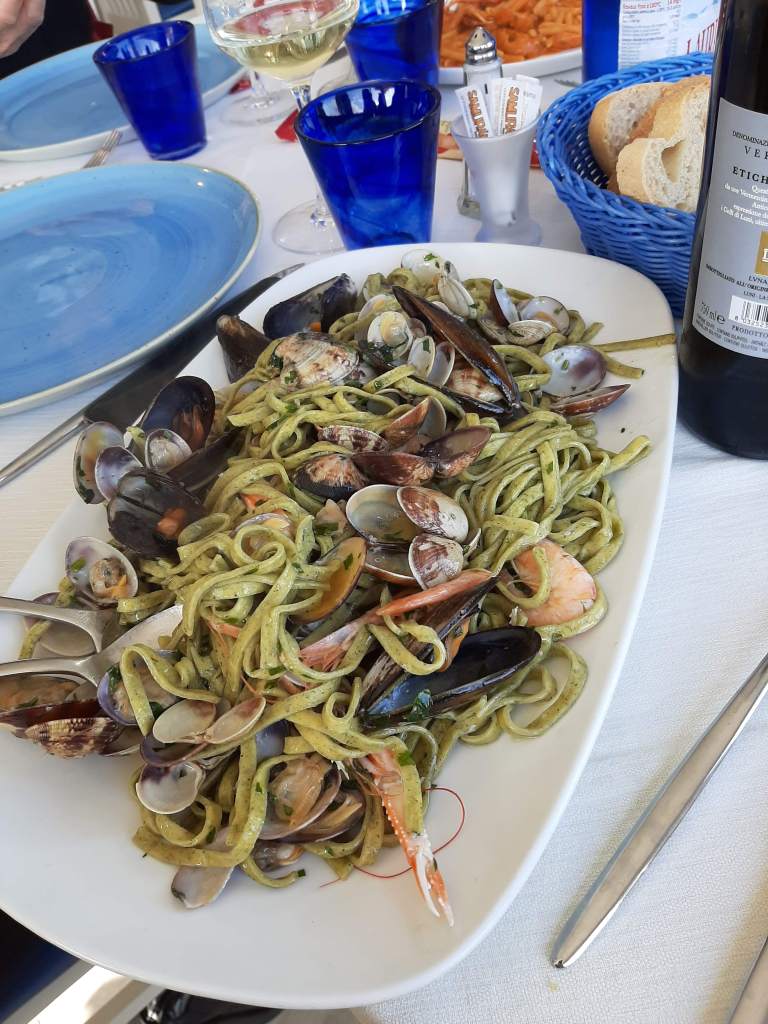
In Genova c’è molto cibo ottimo, ma la struttura dei pasti è diversa!
Tipica per la colazione io mangio il panino con speck, formaggio e burro. Ma in Italia per colazione non ci sono uova con pancetta e avocaodo, italiani fanno una colazione semplice: un espresso o caffè con cornetto o biscotti! Questo perché mangiano un po spuntino dopo e mangiano un pranzo grande.
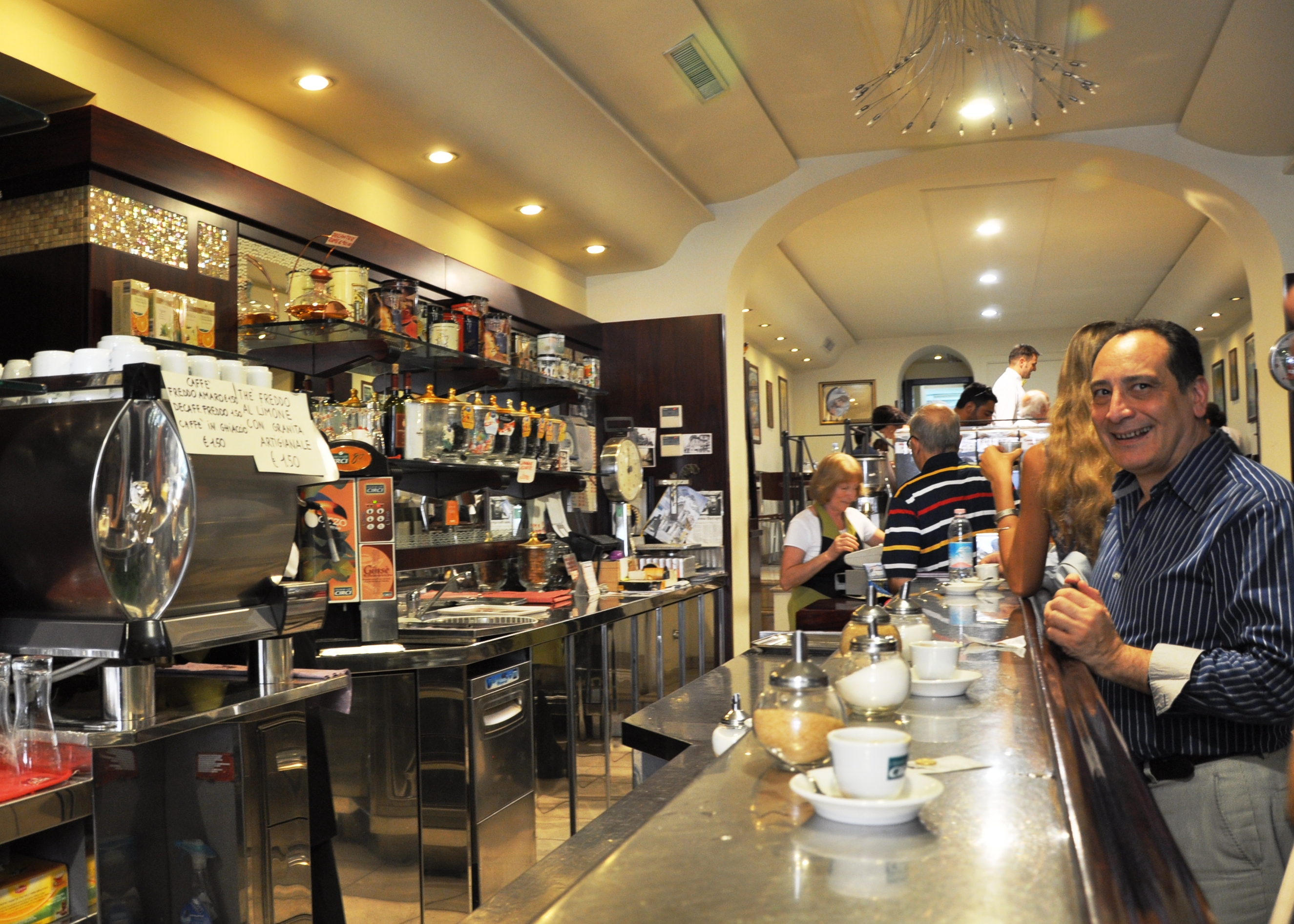
Anche, è tipico bere caffè in piedi nel bar, o mangiare in piedi! Per me, c’è molte difficile perché mi piace godermi il caffè, ma quando mi alzo mi sento affrettato!
In Italia, la famiglia tornano a casa per il pranzo alle tredici. Mangiano la pasta o riso per primi e la carne per secondi piatti con le verdure per contorno. Dopo il pranzo mangiano anche la frutta o qualcosa di dolci prima tornare al lavoro alle quindici.
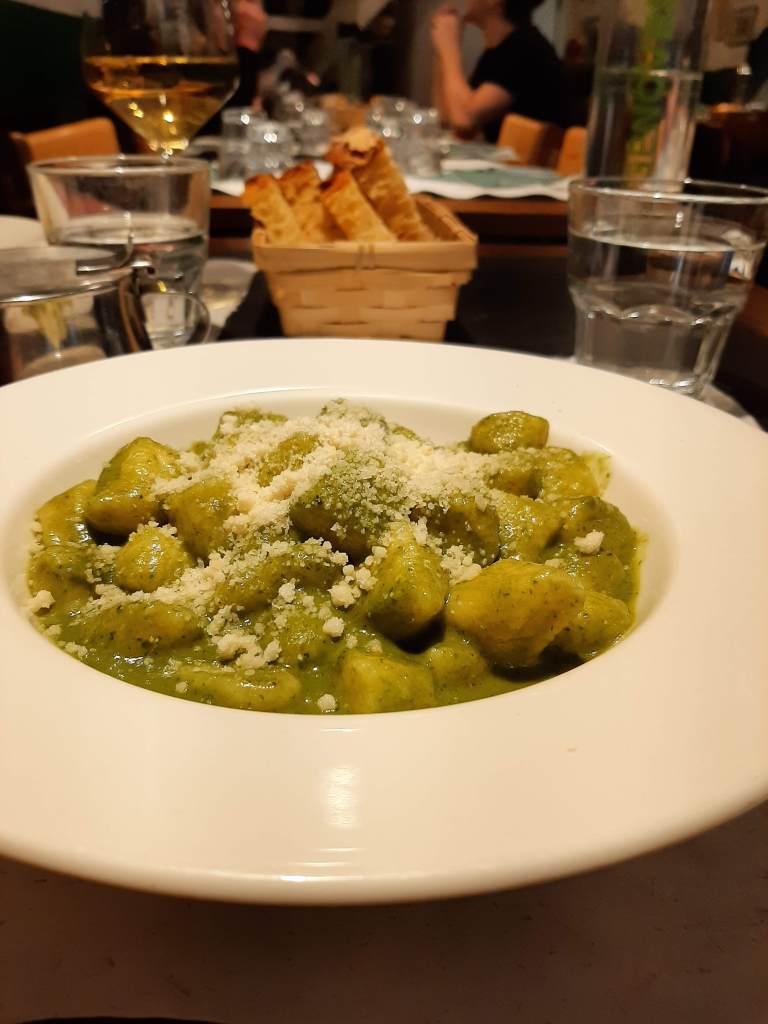
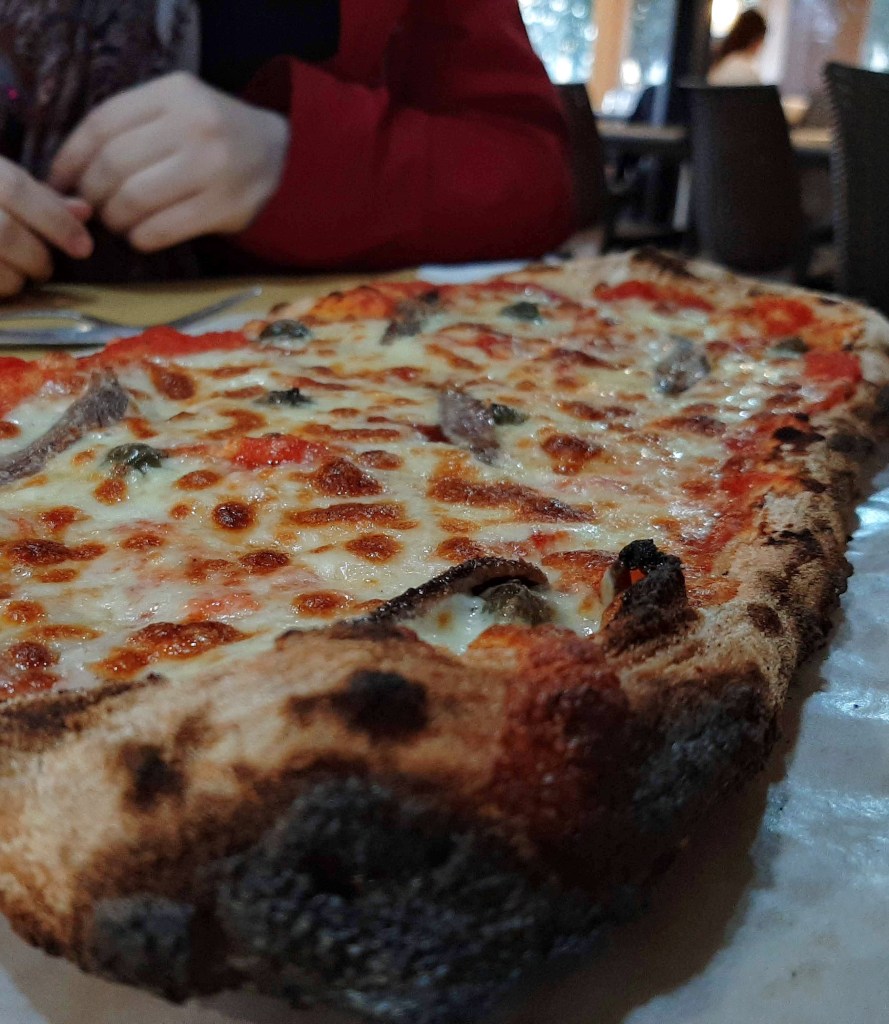
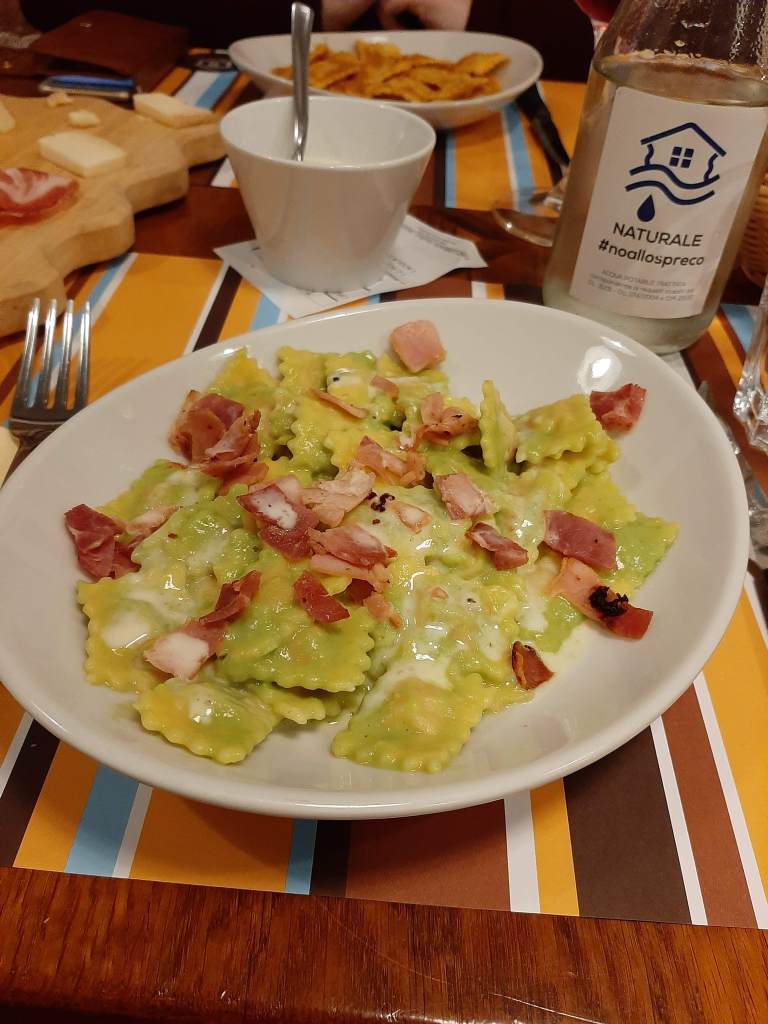
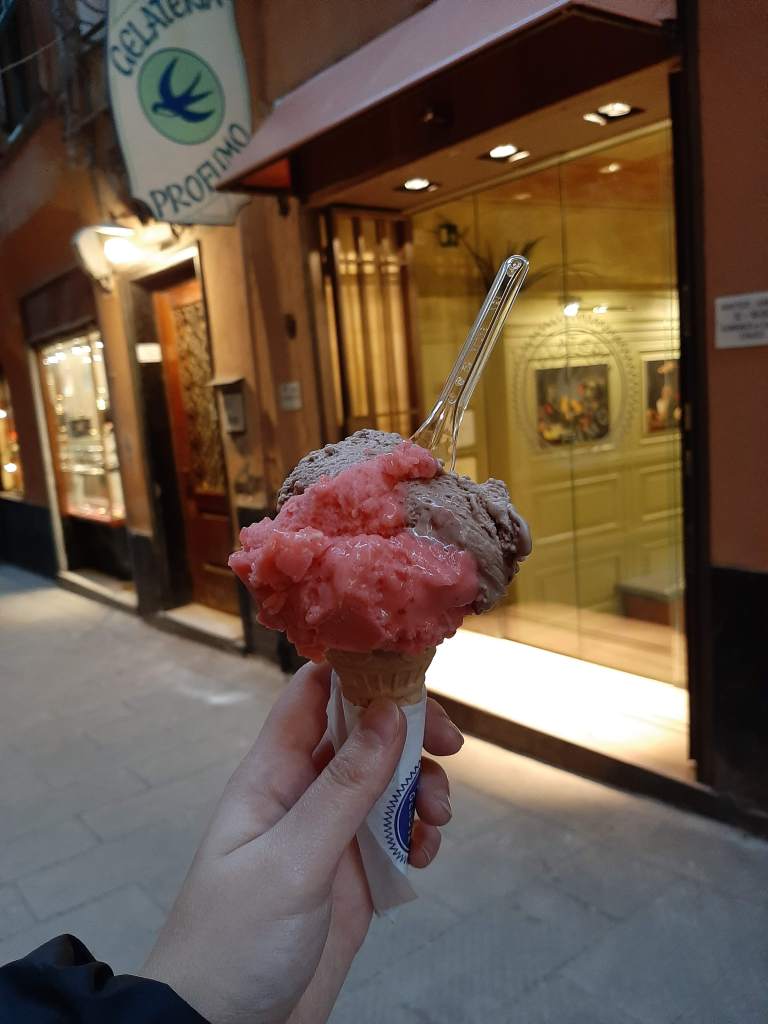
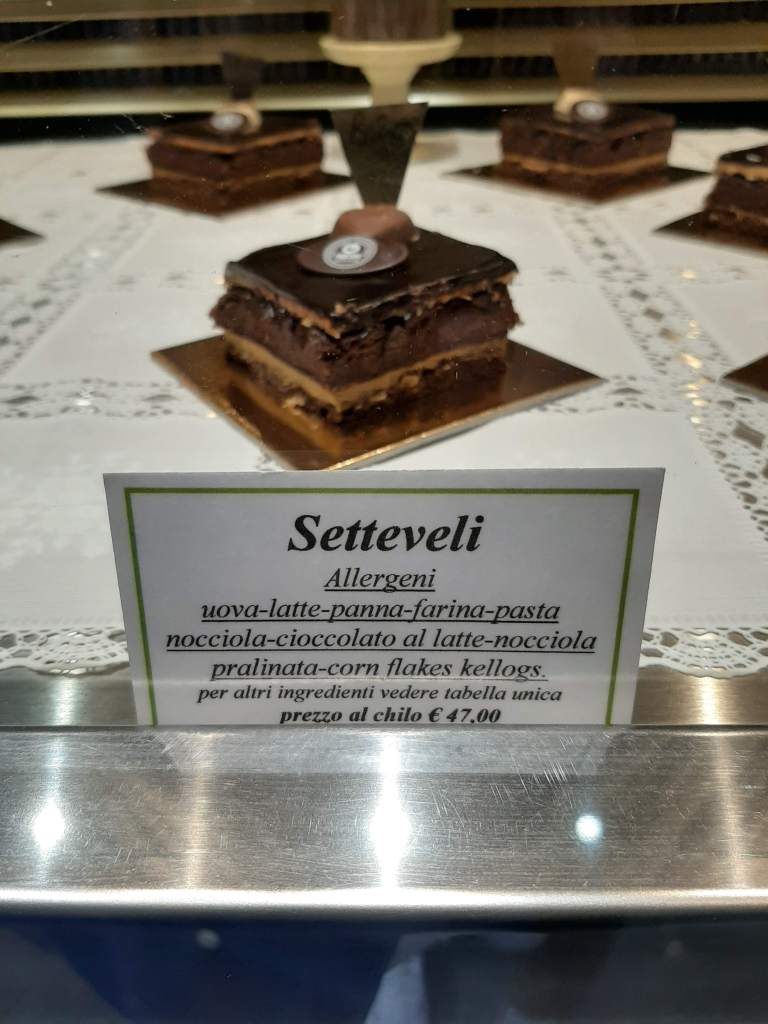
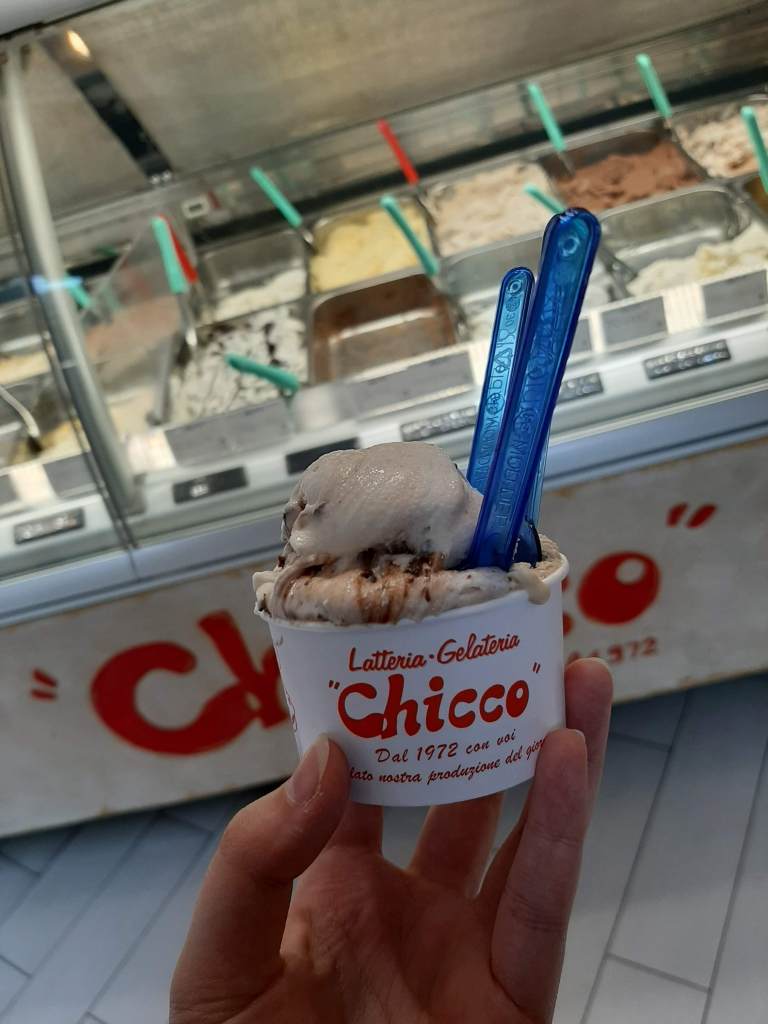
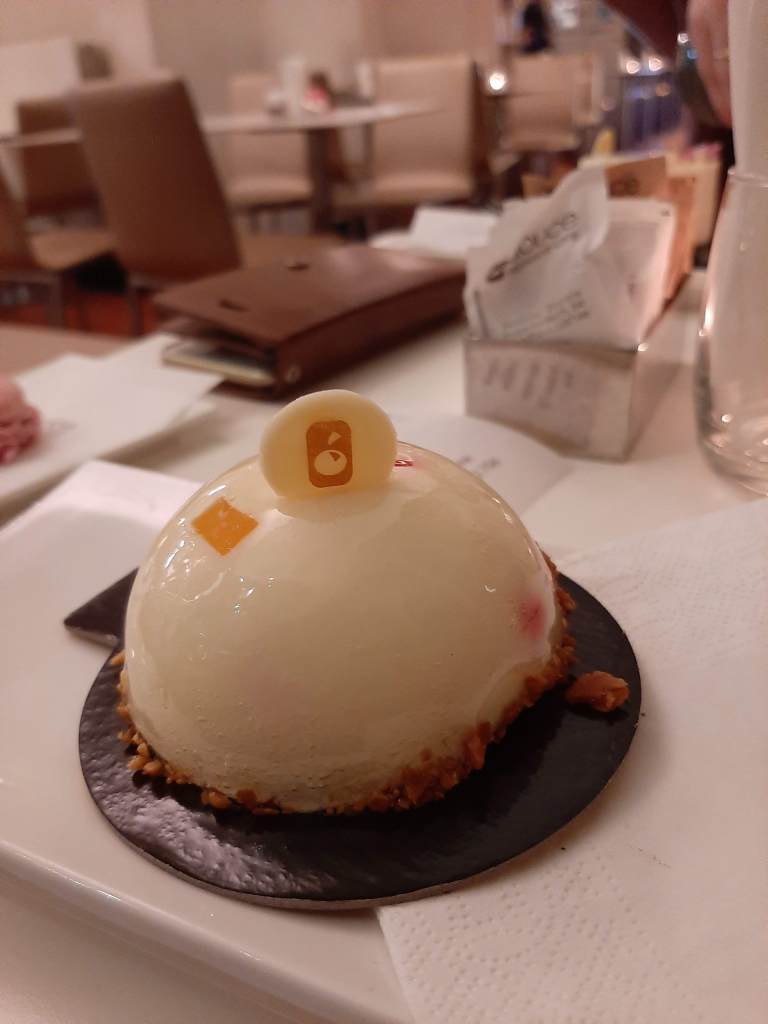
In città, molto spesso i negozi chiudono a pranzo dalle dodici e mezzo alle seidici. Quando sono andata a Gavi, tutti i negozi ci sono chiusi, c’era solo un ristorante aperto! Ma a Genova, ci sono alcuni ristoranti aperti. Finora, io e il mio amico Milly abbiamo visitato alcuni ristorante tipica genovese e abbiamo mangiato trofie con pesto, ravioli, pinsa margherita, tagliatelle con il frutti di mare e abbiamo mangiato molti docli, per esempio il tiramisù, gelati, cannoli o torta Setteveli. (Ho comprato una torta Setteveli dal Pasticceria Profumo, è belissima!
il cibo di Genova!
le dolce!
I ristoranti aprono per cena alle dicciannove. In Italia mangiano tardi perché molto persone tornano a casa alle sei o sette di sera, e svegliano più tardi. In mia famiglia ospitante, mia madre ospitante torna a casa verso le sette e noi cuciamo inseme.
Alcuni negozi hanno apericena, questo è una cena ma con molti aperitivo!
Dopo la cena, sono torno mia stanza, ma fuori in la città ci sono molte persone mangiano la cena o ballano in discoteca.
Before you start reading, there is also a post written below in English but it doesn’t include the exact same content… sorry!
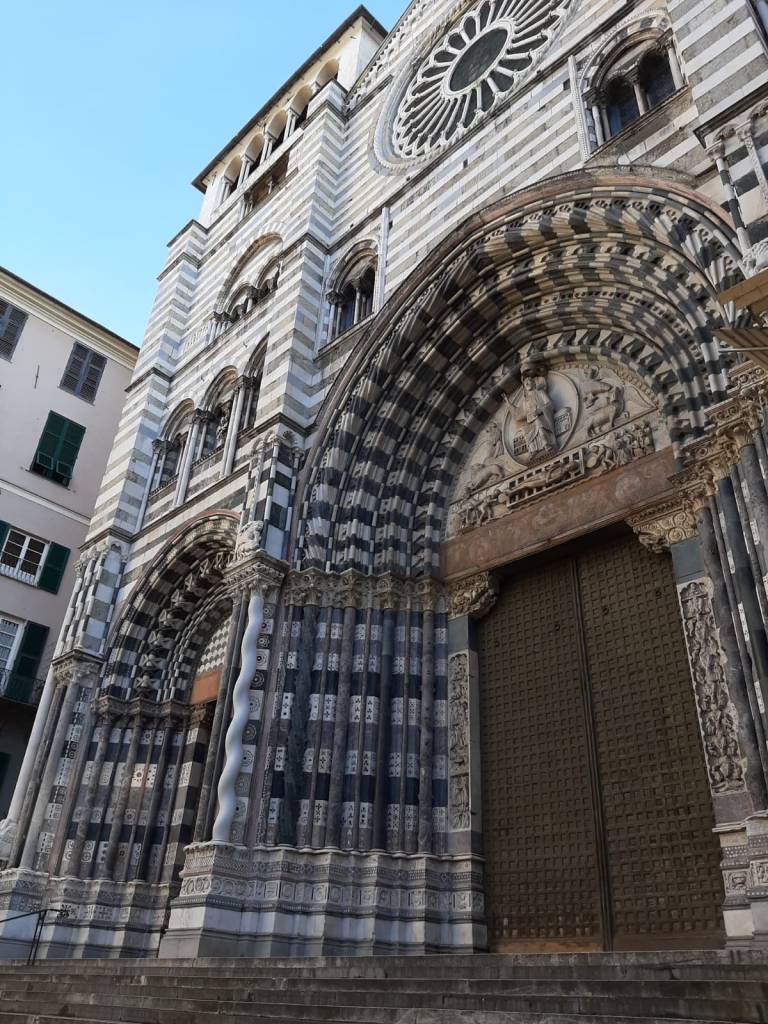
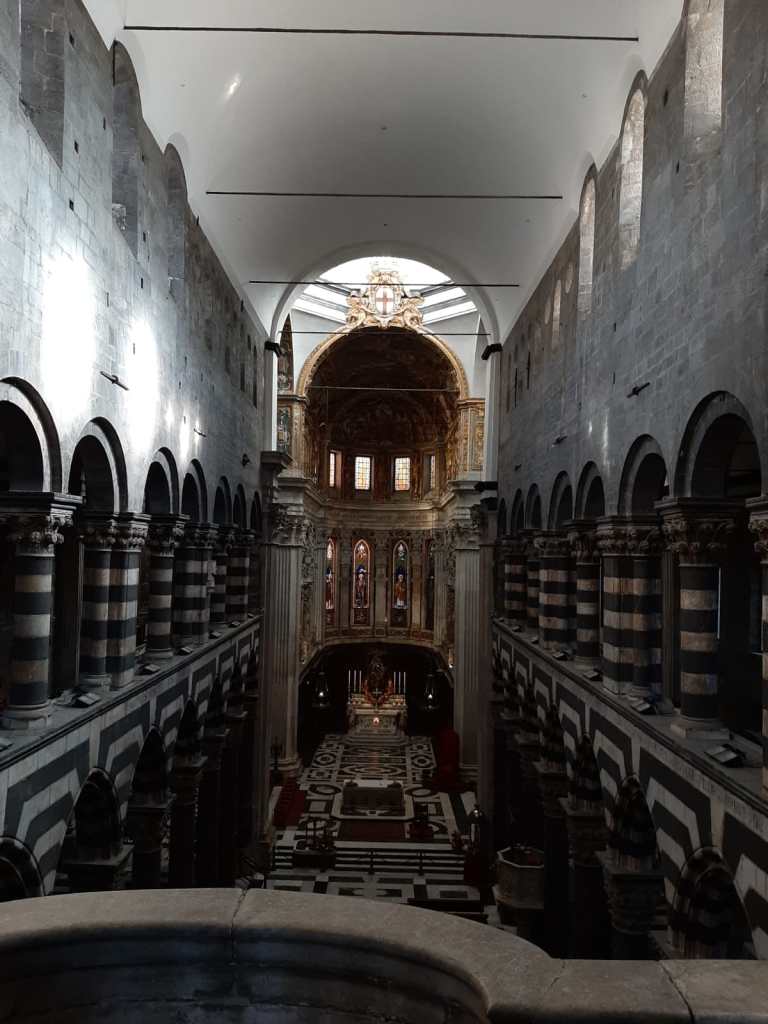
La città di Genova ha molte cose belle, ma quando cammino per la città, vedo molte cose di epoche diverse. Per esempio, il settimana scorso ho visto la cattedrale di San Lorenzo. Guardandolo, vedi una cattedrale grande e bellissima, ma se guardi più da vicino, puoi vedere quanto è piccola la prima versione della chiesa.
Questa cattedrale fu costruita tra il XII e il XIV secolo, e ebbe il contributo di artisti di Pisa, Lombardia, Francia e Normandia che vi lavorarono tra il XII e il XVII secolo, fondendo lo stile romanico e gotico. Per esempio, il marmo verde e rosa fu introdotto dai francesi.
Quando ho parlato con un amico della mia famiglia ospitante, ho capitato quella anche se Genova mantenne la sua indipendena funo alla fine del 1700, fu dominata da paesi come la Francia e il Piemonte.
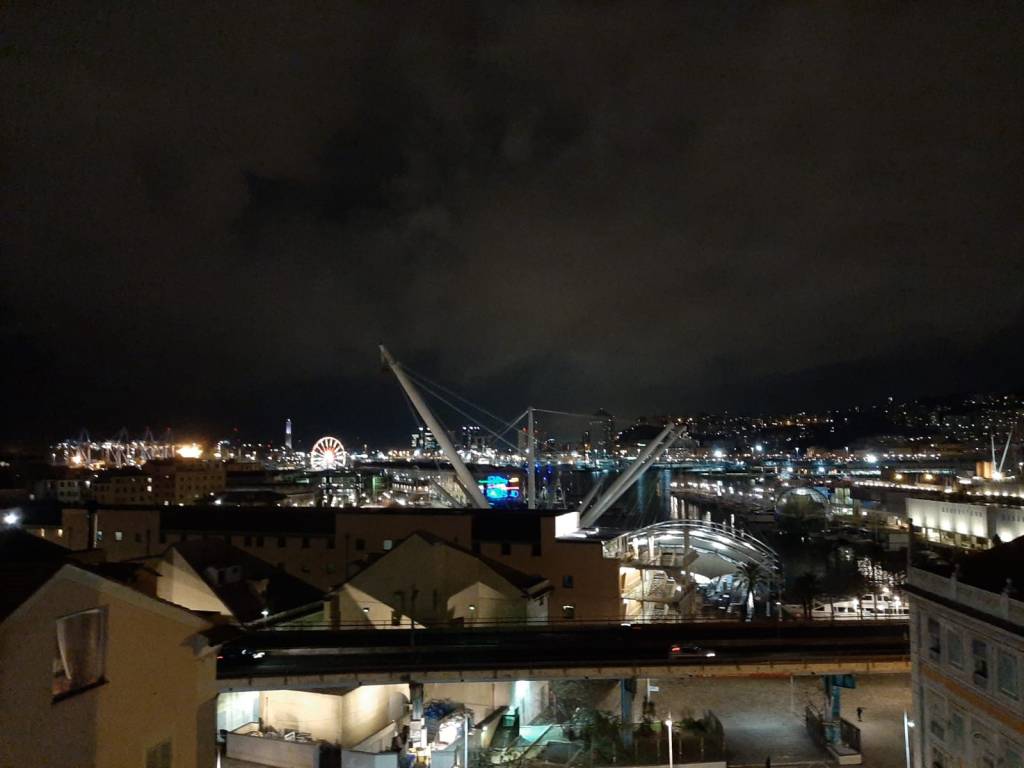
Genova è stata storicamente uno dei porti più importanti del Mediterraneo. In porto antica, la madre della famiglia ospitante ha mostrato dove è iniziata il porto quando era più giovane. A sinistra della foto è la vecchia di Genova, perchè c’è non molte luce!
Secondo me, ora capisco perché è molti importante per studiare filosofia in la scuola qui. La storia di Genova e dell’Europe è molte complicata e ricca, e molti filosfi ed esploratori hanno vissuto qui. Ci sono molte cose interessanti da leggere, studiare, conoscere e capire a Genova e molte altre domande da porre. Questa è molta diversa dall’Australia, ma per me, vorrei studiare filosofia a scuola perché è un modo diverso di pensiero.
Who are we? Where are we? Where are we going? (A more detailed discussion of the above post)
The city of Genova is gorgeous, but when you walk around, you do tend to see a varitey of buildings and designs from a lot of different eras during the time Genova was inhabitant.
You are able to see this at the Cathedral of San Lorenzo, where you can see how big (or small) the church really was when it was originally built. You are also able to see inputs of various artists from neighbourhood areas, such as when the French Renaissance were in Genova, as they commoly used green and pink marble on the churches.
As Genova was founded in 4 BC, it was a very important Roman Port, and consequently occupied later by the Franks, Saracens and Milanese. I realised that even though Genova was an independent for 700 years, it was so constantly influenced by other countries. In the middle ages they were even dominated by the French and Austrian as well for a period before the Risogimento in the late 1800s (pardon me my history is a bit scratchy!).
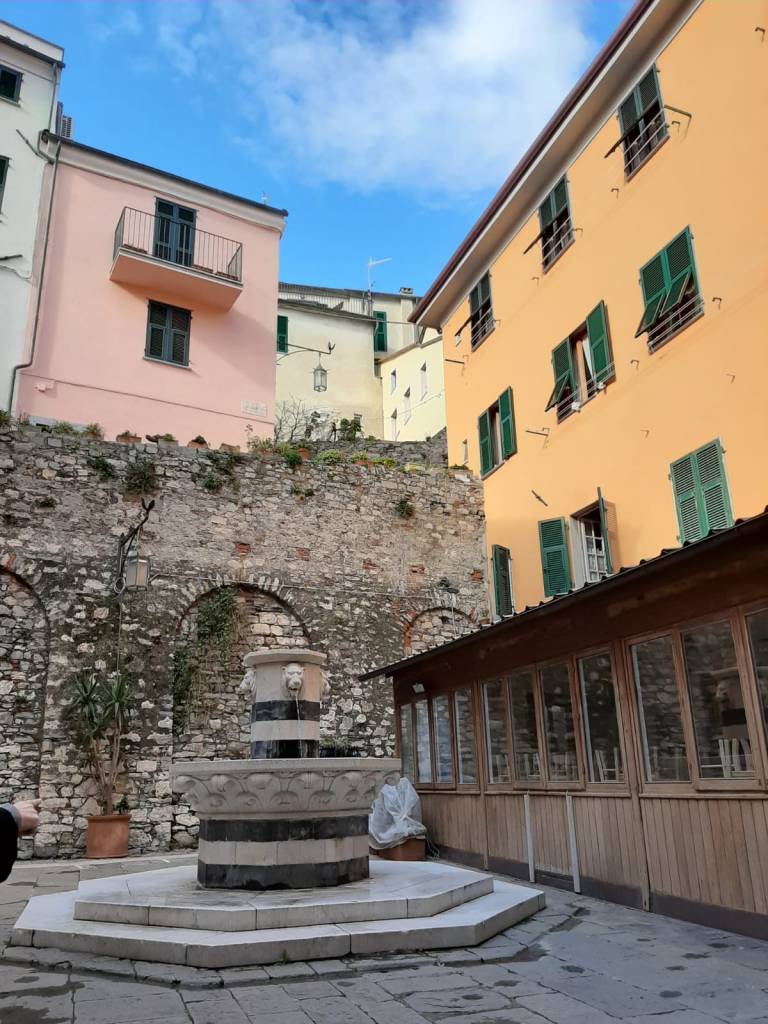
This history of the lasting buildings may be more a question of Genovese architecture, the habit to build on existing structures and recycling recovered materials from older buildings. In fact, you can actually notice how this habit of not getting rid of history continued throughout the years, because throughout Genova you will see a nice alleyway of houses and then randomly to your right an old fountain!
A true story! But why didn’t they just get rid of it? And where’s the rest of it?
You will even be able to see and practically smell the history and culture that have been combined and preserved throughout history, where one medieval base is serving as the base of a 14th Century building, and other gothics designs supporting modern shops through the tight alleyways of Genova.
Knowing that a lot of important philosopers were from Italy, they have created an impact on the core of today, such as modern Political Science, Education, the Age of Enlightenment, and many ideologies and isms. It also questions the development of architecture and the meaning of human habitation as well as its meaning to live in such environments. All this, despite not being a lot of information, is reason enough why this subject is studied here in Italy.
The schooling system offers a variety of pathways, but at the Liceo Classico Cristoforo Colombo (I don’t teach there but my host brother goes to this school), they offer philosophy, where you start first year of high school learning all the big philosophers, before focusing in on how it relates to us today. In one of my philosophy classes at the Liceo Statle Sandro Pertini they are currently studying Hannah Arendt, the German American philosopher and political theorist who was around at the time of Hitler’s rise to power. They will begin to discuss the range of topics she impacted history on and how it has impact on the political theories of today.
I believe such topics are important to learn about in Australian schools. Whilst I understand that history was made a little differently in Australia, the history of who we are and where our future lies is important, and in my opinion was not discussed enough in the classroom. It almost makes me want to stay in their classes to keep learning! (almost) There is so much to philosophy that allows you to questions so many parts of life and the world, a topic that I know so little about but tried to write about in this blog.
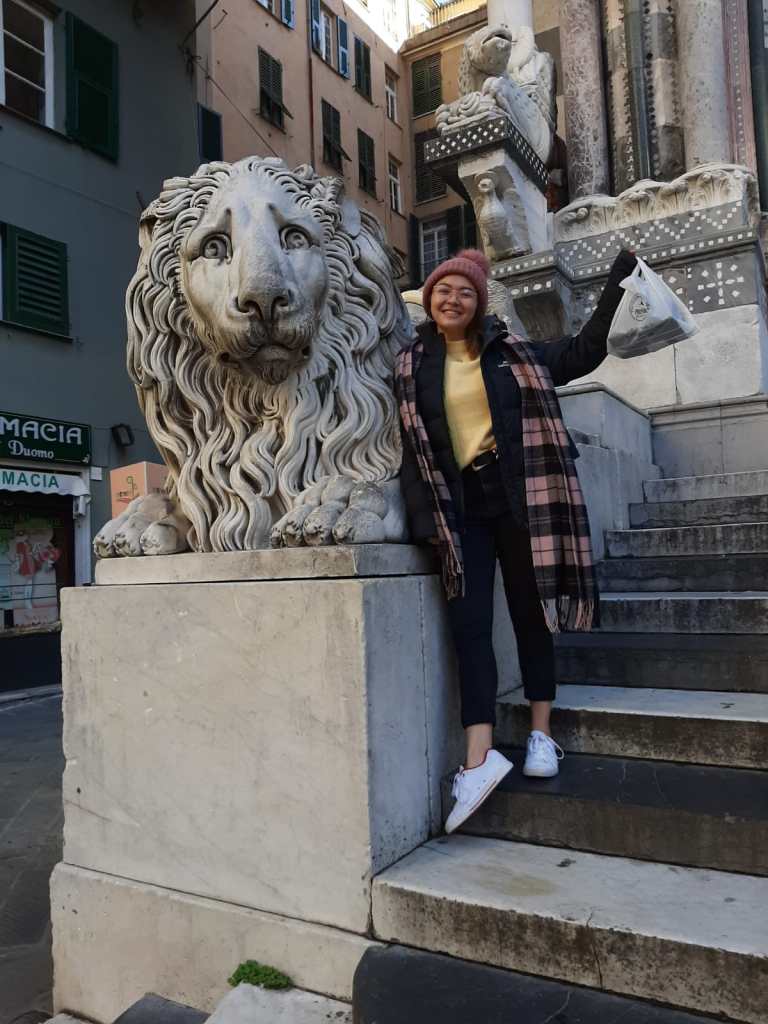
That’s all for now, here’s a picture of me with a lion!
Travelling is always such an exciting part of your trip, although flying from Australia does make it an extra long journey. For me it took 21 hours for flying, but from door to door it was 34 hours!! Flying with Singapore Airlines was pretty easy because the food and in-flight entertainment is always top quality and the service is always one of the best that I’ve seen on flights.
Not to mention, Changi Airport is also one of the most beautiful and exciting airports you can come across. Not only does it has very high end stores across the three terminals, they also have free interactions such as the Butterfly garden as well. If you ever do transit at Changi, you can also collect a $20 voucher which you can use on shopping within the airport!
I arrived at Milano Airpot (MXP) on a Sunday morning, which despite still being in the holiday period was still very busy. I managed to buy a SIM card quite cheaply at the airport with Vodafone.
There are a lot of options for transport when leaving the airport. There’s plenty of taxi’s around, and there is a train underneath the airport, and plenty of coaches outside as well that you can catch. I would recommend Flixbus, it only cost me €8 to go from the airport to Milano Centrale, which took just over an hour. They also have an app that you can download so it’s more pracitcal rather than paying cash up front, where I heard someone charge €2 extra.
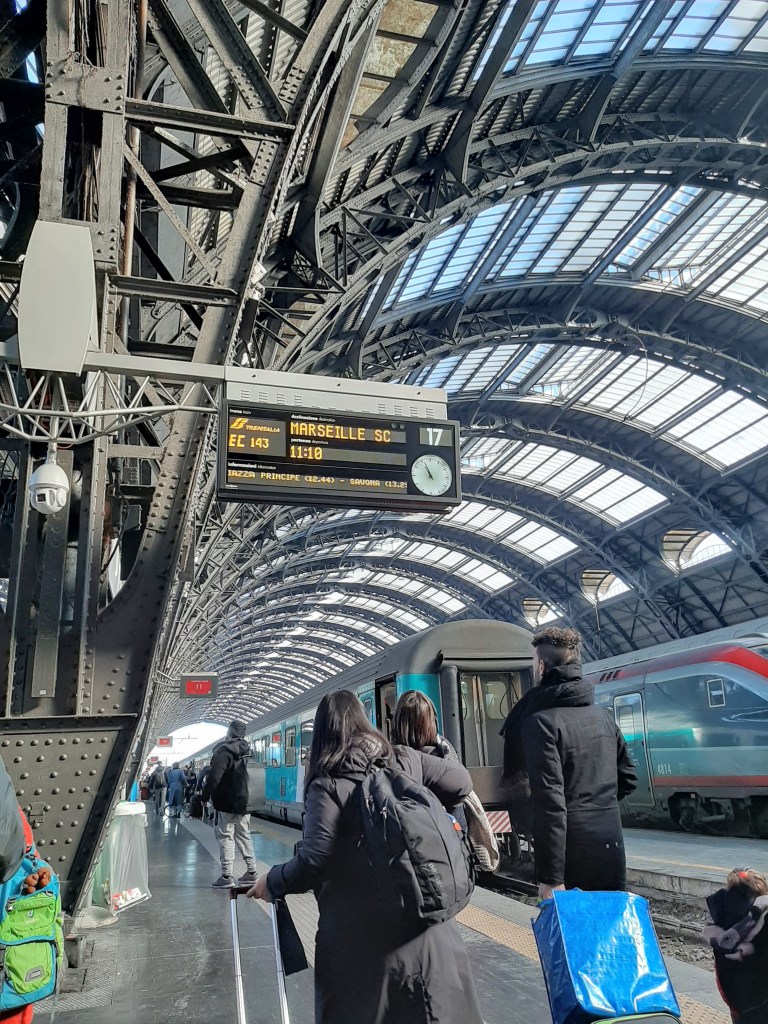
From there you can go to the Milano Centrale Railway Station. The station was very big and super busy but at that time in the morning there’s a lot of people like you travelling in the same manner! You are able to buy a train ticket with the app TrenItalia or there are also ticket machines on the first floor of the Station. I caught the train to Genova Piazza Principe and it also took just over an hour, although we did leave a little later than planned and we did get stopped on the way due to some mechanical situation.
Tip #1: Always, ALWAYS be prepared for things to be late in Italy. Do not trust transport.
After settling in to the house it was pretty smooth from there. The daughter of my host family took me around the Piazza de Ferrari and we saw Palazzo di Bianco and Palazzo di Rosso, and had some gelato.
A lot of Genova is accessible by walking, and it’s especially easier than private transport because the roads are so narrow and probably really difficult to drive. You will also have the option of catching a bus as well. You’re able to organise your trips by AMTGenova, it’s a great app although I still haven’t found the English option, but I’m getting by. You can buy your tickets on the app or also at ticket booths scattered around the city. The thing I found the most hilarious was the fact that you actually have to pay to ride the venicular or even an elevator here! It counts as part of the transport because we’re living in such a steep area.
My name is Jenny. I’m Swedish, Taiwanese and Australian. I speak five languages, and I love travelling and singing!
I started this blog for two reasons:
I wanted to track my days in Genoa as part of a subject I was meant to take at university, so I could still write blog entries in Italian (long story short: I’m not enrolled anymore)
I felt like writing about my travelling so I could appreciate my time and I guess my adventures more than I used to, and publicly so even though no one may read it, I’ll still feel more accomplished than I would writing it privately!
There may be a slim chance if I am bored I’ll write up some blogs about previous places I have travelled to later on, but we’ll see!